
What Waiting Until the First Storm Actually Costs You
Skip garage door prep this fall and the bill usually shows up at the worst possible moment: a spring that finally snaps while you're late for work, an opener that won't respond on a cold, wet morning, or a door that binds halfway up because water got into hardware that's been caking up with summer dust for months. None of these failures happen overnight. They build quietly through a long dry season and then get triggered by the first real cold snap or rainstorm. A tune-up now is a $75-$150 maintenance visit. Waiting usually turns into a $200-$500 spring replacement, an opener board fried by moisture, or a door off its track that needs emergency service on a Saturday.
Why the Dry-to-Wet Switch Is Hard on a Garage Door
Fresno County summers are long, hot, and dusty, and that dust doesn't disappear when the weather turns - it settles into tracks, rollers, hinges, and the garage door opener's moving parts. Then winter brings rain, higher humidity, and colder nights. That combination of dried-in grit plus new moisture is what causes most of the garage door problems people deal with between November and February: gritty, grinding rollers; stiff hinges; rust starting on exposed hardware; and springs that have to work harder lifting a door that's no longer moving smoothly.
Springs Take the Dry Season Wear, Then Fail in the Cold
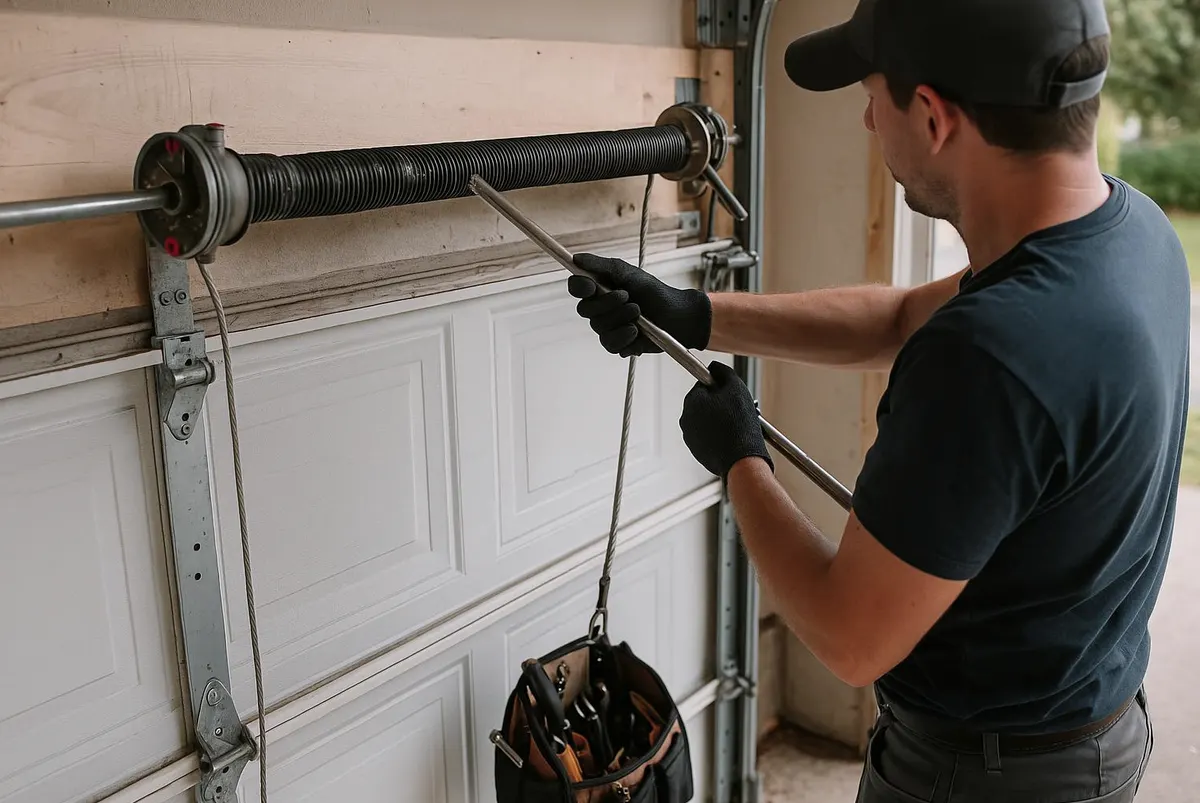
Torsion and extension springs lose a small amount of tension with every cycle, and heat accelerates metal fatigue. A spring that's been quietly weakening all summer is far more likely to give out once temperatures drop, because cold metal is less flexible and more prone to sudden failure. If your door feels heavier than usual when you lift it manually, or the opener strains and makes a louder motor noise than it used to, that's a spring telling you it's near the end of its life. Garage door springs are under extreme tension and are not a DIY repair - this is one of the few jobs where calling a technician is genuinely about safety, not convenience.
Weatherstripping and Seals Matter More Once the Rain Starts
Inland Fresno County winters bring real rain, and a garage with worn weatherstripping along the bottom or sides will let water, wind-driven dust, and drafts straight in. Check the rubber seal along the bottom of the door - if it's cracked, flattened, or pulling away from the track, water will pool under the door instead of running off. Side and top seals matter too, especially on older homes where the door frame has shifted slightly over the years, which is common in this area given seasonal ground movement and the earthquake retrofit work many older Fresno County houses have had done over time.
Openers and Sensors Don't Love Cold, Damp Mornings
Garage door openers rely on safety sensors mounted a few inches off the ground on either side of the door. These are exactly where moisture, condensation, and dust accumulate, and a dirty or slightly misaligned sensor will cause the door to reverse unexpectedly or refuse to close at all - usually first thing in the morning when it's coldest and most frustrating. Lubricant that worked fine in summer heat can also thicken or gum up with dust, making chains and screw-drive openers sound rougher than normal.
A Practical Winter-Prep Checklist
- Wipe down tracks and rollers to clear out dried summer dust before it mixes with winter moisture and turns into grime that binds the door's movement.
- Lubricate hinges, rollers, and the opener chain or screw with a garage-door-specific lubricant, not household oil, which attracts more dust.
- Inspect the bottom weatherstripping and replace it if it's cracked, stiff, or no longer sealing flush against the floor.
- Check side and top seals for gaps where rain or drafts could get in, especially on older doors or frames.
- Test the auto-reverse safety feature by placing a block of wood in the door's path - it should stop and reverse immediately on contact.
- Clean the photo-eye sensors near the bottom of the tracks with a soft cloth, and make sure both are aligned and lit.
- Listen for new noises - grinding, popping, or a louder-than-usual motor often means a spring, roller, or bearing is wearing out.
- Check all hardware - bolts, brackets, and the track mounting - since loose fasteners get worse once wood or framing swells slightly with winter moisture.
- Test manual release so you know it works in case of a power outage during a winter storm.
When to Call Kerman Garage Door
If you've gone through the checklist and the door still feels heavy, the opener still struggles, or you've spotted a spring with visible gaps or rust, it's time to call in a technician rather than keep adjusting things yourself. Kerman Garage Door handles seasonal maintenance visits that cover exactly this kind of tune-up - lubrication, hardware tightening, sensor alignment, and a full safety check - so small issues get caught before winter weather makes them worse. If a spring is clearly failing, our spring replacement service gets it swapped out safely with the correct tension for your door's weight, which isn't something to attempt without the right tools and experience. We work on homes and businesses throughout Kerman, Fresno, Biola, San Joaquin, Firebaugh, Mendota, Tranquillity, and Huron, and we show up on time with the parts most repairs need.
Don't wait for the first cold snap to find out your garage door wasn't ready for it. Call Kerman Garage Door today to schedule a winter maintenance check and keep your door running smoothly through the season, right here in Kerman, CA.